


Why a JCB Toughphone Belongs in Your Climbing and Hiking Kit
There's a moment every hill-goer knows. You're three hours from the car, the cloud has dropped, and you reach into your pack for your phone to check the map — only to find a cracked screen, a dead battery, or a handset that's quietly drowned in a damp pocket. Whether you're tackling a technical climb or a long day on the trails, a phone isn't a luxury out there. It's navigation, communication, and in the worst case, a lifeline.
Ordinary smartphones are built for cafés and commutes. JCB Toughphones are built for the kind of places where there are no cafés for forty miles. Here's why the range from jcbphone.com deserves a place in your climbing and hiking kit.
Built to survive the mountain, not just describe it
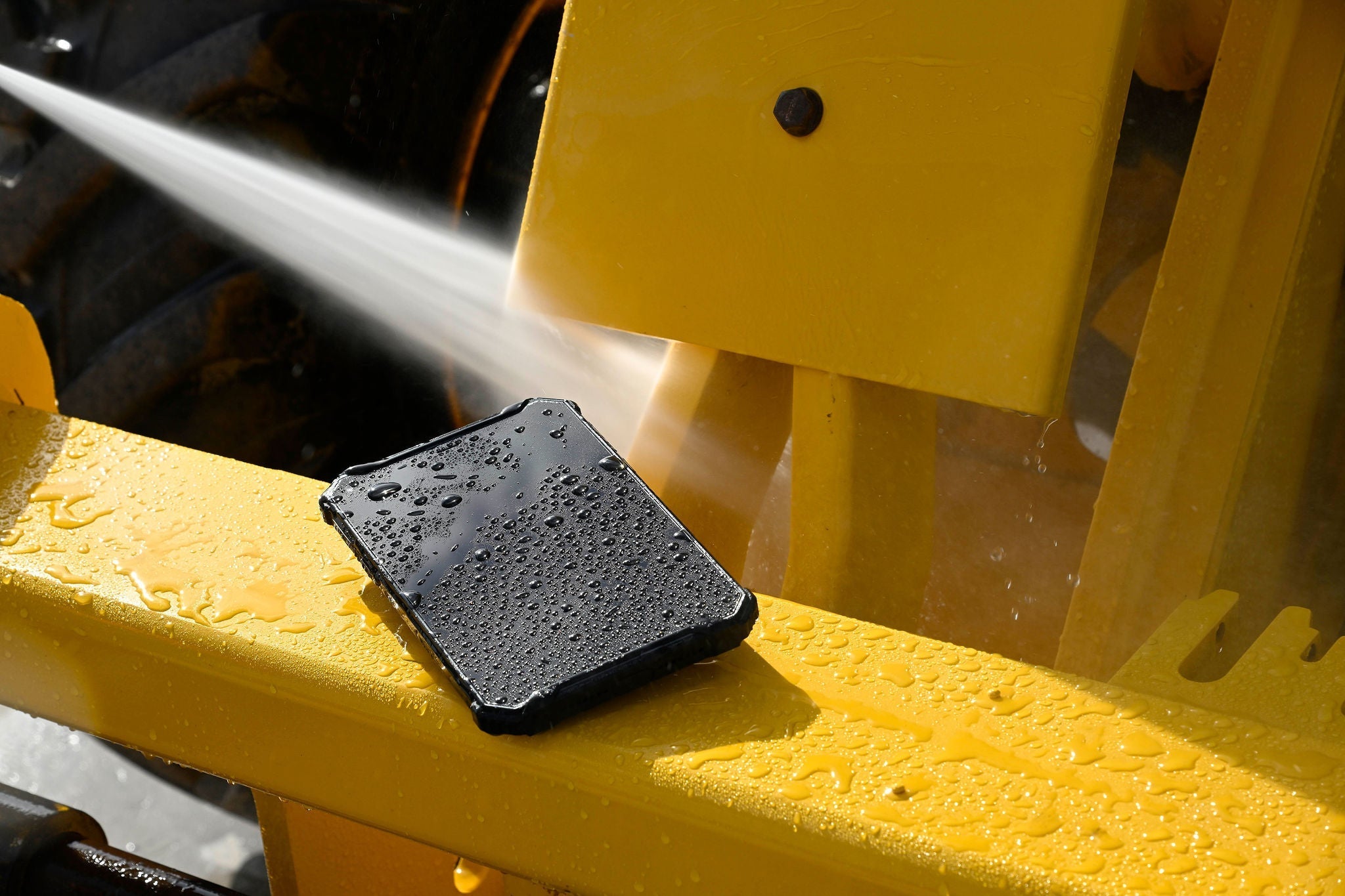
The headline reason is durability, and JCB doesn't do this by halves. The current Toughphone range — the brand-new E50, the MAX M20 and the MAX Pro P20 — is rated IP69K, the highest level of dust and water protection you'll find on a phone. That means total dust-tightness and resistance to high-pressure water jets, not just a splash of rain.
Every model is also MIL-STD-810H compliant and drop-tested to 1.8 metres onto concrete. Scrambling over wet granite or stumbling on a rooty descent, a fumbled phone is a question of when, not if — and a 1.8-metre drop rating covers the height you'd drop it from while standing. The newest E50 even survives full submersion in 1.2 metres of water for 30 minutes, so a river crossing or a downpour on an exposed ridge won't end your day.
For climbers and hikers alike, this matters more than any camera megapixel count. A phone that keeps working after a slip, a soaking, or a knock against rock is a phone you can actually rely on when it counts.
Battery life that outlasts your trip
Off-grid, there are no plug sockets. Battery anxiety is real, and it's where these phones genuinely pull ahead of mainstream handsets.
The newest E50 carries a 5,000mAh battery rated for up to 21 days of standby and 32 hours of talk time — and crucially, it adds wireless charging, 30W fast wired charging, and a reverse-charging powerbank function, so it can even top up your GPS watch or head torch in the field. For pure capacity, the MAX M20 and MAX Pro P20 step up to a huge 10,000mAh battery, good for two to three days of real-world use and up to 40 hours of talk time, both with powerbank functionality built in.
That powerbank trick is a quiet hero on multi-day routes and thru-hikes: one phone that can revive a dying head torch, watch, or a partner's handset means one less battery brick in your pack — and a real safety margin if a trip runs long.
If raw endurance is your priority, the older JCB Toughphone MAX went even further with a 12,000mAh battery rated for up to a month of standby, and the value-focused E10 packs a larger 6,500mAh cell than the E50 — worth a look if battery size trumps having the newest model.
Cameras that see in the dark — and the cold
Early starts and late finishes mean moving in the dark. Every current Toughphone includes a dedicated night vision camera alongside its main sensor. The E50 pairs a 50MP main camera with a 20MP infrared night-vision lens, while the M20 and P20 add a 64MP main sensor. That's genuinely useful for picking out a path at dawn, checking conditions before first light, or documenting a situation when visibility is poor.
The flagship MAX Pro P20 goes a step further with a built-in thermal imaging camera, mapping heat from -15°C to 550°C with ±2% accuracy. While JCB markets this for spotting faults and heat loss on the job, the outdoor applications write themselves: scanning terrain, checking gear, or locating warmth in a search-and-rescue scenario. It's a tool no standard phone offers.
Connectivity where it actually matters
A rugged phone is no use if it can't get a signal in the glens. The new E50 runs 5G across all major UK bands with Dual SIM plus eSIM, so you can carry a backup network on the same handset — invaluable when one carrier has no coverage on the trail but another does. (The 4G E10 also supports band 20, the low-frequency band that reaches furthest into rural and upland areas, if that's a priority for you.)
Several models in the range also include a dedicated Push-to-Talk button, turning the phone into a radio for keeping a group connected without unlocking and hunting for an app — handy when a climbing party spreads out across a pitch or a walking group strings out along a ridge.
Designed for gloved, cold-weather hands
Climbing and hiking rarely happen in shirtsleeves. JCB builds these phones with chunky, grippable bodies that are far easier to handle with numb or gloved hands than a slippery glass slab — and features like face unlock help when gloves make a fingerprint or touchscreen tricky. The E50 manages this while staying remarkably slim at just 11.9mm, so it still slides easily into a jacket pocket.
Which one should you take up the hill?
It comes down to budget and how far you push your trips:
- JCB Toughphone E50 (£399.99) — the newest in the range. Android 16, 5G, dual SIM + eSIM, wireless and reverse charging, 50MP + 20MP night vision, and a slim 11.9mm build. The modern, do-it-all pick for hikers and climbers who want the latest tech.
- JCB Toughphone MAX M20 (£499.99) — a bigger 10,000mAh battery with reverse charging and a stronger triple-camera system. The choice for multi-day routes where battery life and powerbank backup matter most.
- JCB Toughphone MAX Pro P20 (£699.99) — the do-everything flagship with thermal imaging, 12GB RAM and 512GB storage. For serious expeditions and anyone who wants the most capable tool available.
- JCB Toughphone E10 (£299.99) — the value option, with a larger 6,500mAh battery than the E50 if outright endurance on a budget is what you're after.
All of them are backed by JCB's reputation for kit that survives a hard life, and come with a 2-year warranty.
The bottom line
In the mountains, your phone is part of your safety system, not just a gadget. A JCB Toughphone gives you a screen that survives the drops, a battery that outlasts the route, cameras that work in the dark, and a signal where ordinary phones go quiet. Whether you're roped up on a climb or covering miles on the trail, that's not over-engineering — that's exactly what the outdoors demands.

Zanechať komentár
Táto lokalita je chránená testom reCAPTCHA a vzťahujú sa na ňu pravidlá ochrany súkromia a podmienky poskytovania služby hCaptcha.